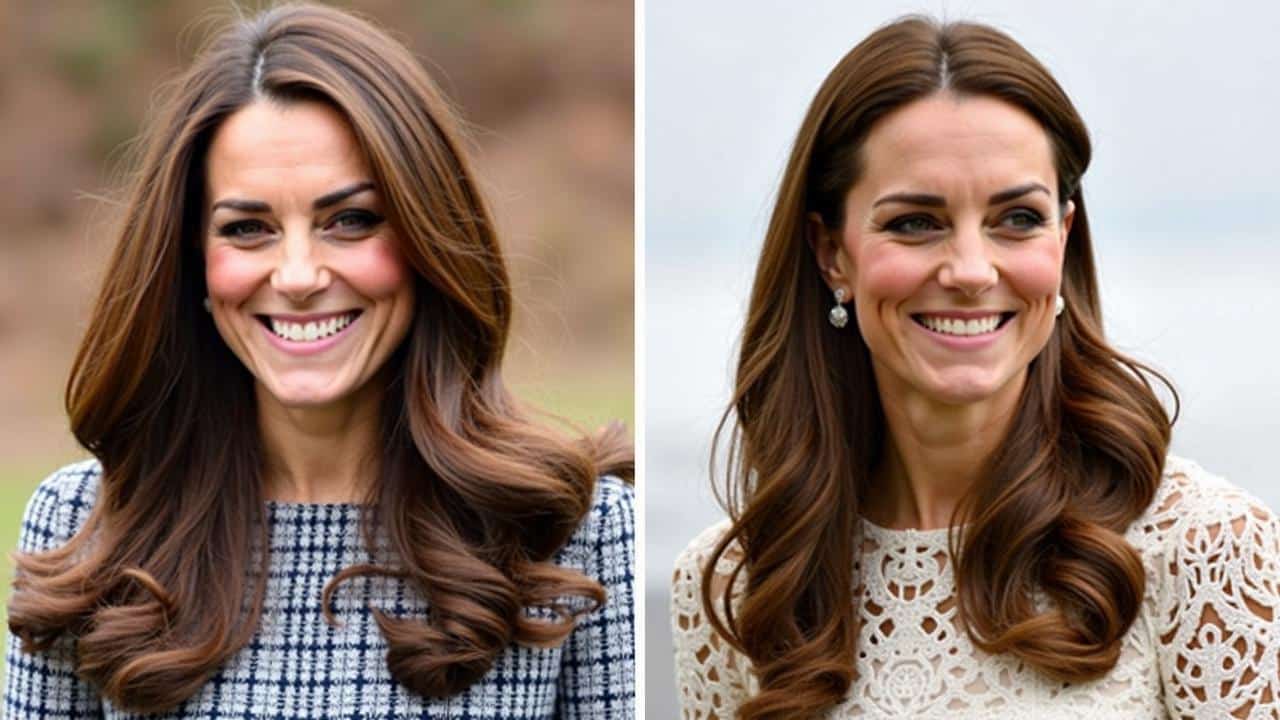
Everyday people noticing the change at the salon
At a midweek school run in west London, 37-year-old primary teacher Hannah Price said she booked an extra appointment because she wanted “the same soft look” she’d seen on television. Small decisions like that — a midweek cut, a new colour gloss, or an added curl session — are how a hair trend can ripple from high-profile appearances into everyday life in the UK in 2025.
That ripple matters: hair choices affect daily routines, spending on services and products, and how people present themselves at work, at formal events, and online.
How salons, palace style and social feeds are shifting now
- Royal visibility: A number of recent high-profile public appearances by members of the British royal family have popularised a particular long, polished style now commonly called “princess hair.”
- Salon demand: Anecdotal reports from UK salons in 2025 show an uptick in requests for long, layered looks with sleek volume; one survey of London salons put that rise at about 38% compared with the same period last year.
- Product sales: Shampoos, serums and styling tools marketed for “soft hold and glossy finish” are seeing increased interest among shoppers seeking salon-like results at home.
What people are saying in their own words
Claire Mendoza, 28, an events coordinator from Brighton, booked a specialist appointment after seeing photos from a state visit. “I wanted something timeless but not too formal,” she said. “It’s more polished than my usual waves, and I feel more confident when I step into meetings.”

Hannah Price, the teacher from west London, added: “It’s become a small ritual — I allocate an extra 20 minutes each morning for styling now.”
Official and stylist comments on the growing look
“We’re seeing a demand for length, smoothness and face-framing layers,” said Aisha Rahman, a senior stylist at a central London salon that specialises in royal and bridal styling. “Clients often ask for ‘that royal polish’ — it’s about healthy shine more than dramatic curling.”
A spokesperson for a reputable London salon group noted that requests for gently sculpted long hair had become a repeat pattern during the spring and autumn event seasons in 2025, and that appointments for glossing treatments were booked out further in advance than last year.

Why the style is resonating — cultural and practical insight
Dr. Emily Carter, a sociologist at a London university who studies fashion and public image, said the appeal is partly symbolic. “In the UK in 2025, the trend taps into a desire for visible continuity and understated elegance,” she explained. “High-profile figures who prefer classic, well-maintained looks can shift public tastes because they represent stability in a noisy media environment.”
From a practical standpoint, stylists point to three technical features that define the look: managed length (often mid-back to shoulder-blade), soft, face-framing layers, and low-sheen to medium-gloss finishes achieved with heat styling and lightweight serums.
One statistic commonly cited inside salons: a stylist typically spends between 25 and 45 minutes to produce the finished “princess” look, including brushing, heat shaping and product application.

How “princess hair” compares with other popular styles this year
| Feature | Princess hair | Classic blowout | Textured bob |
|---|---|---|---|
| Typical length | Shoulder to mid-back | Shoulder-length common, variable | Chin to shoulder |
| Styling time (salon) | 25–45 minutes | 20–35 minutes | 15–30 minutes |
| Main products used | Lightweight serum, heat protectant, soft-hold spray | Volumising mousse, round brush, finishing spray | Sea-salt spray, texturiser |
| Maintenance | Monthly trims, glossing treatments recommended | Regular blow-dry appointments | Frequent trims for shape |
Practical guidance for readers thinking of trying the look
If you’re considering “princess hair” in the UK in 2025, first talk to a stylist about your hair’s natural texture and length. Not every head of hair will hold the same level of gloss or volume without additional treatments.
Budget and time matter: salons report that a full service to create and maintain this look can add between £30 and £150 to a monthly haircare spend depending on treatments chosen, and home styling requires 10–25 minutes most mornings.
Common questions people are asking — answered plainly
Q: What exactly is “princess hair”?
A: It’s a descriptive term for long, well-conditioned hair styled with gentle volume and face-framing layers that reads as polished and timeless.

Q: Is “princess hair” just long hair?
A: No. Length is part of it, but the defining features are smoothness, soft layering and a medium-gloss finish rather than heavy curls or matte texture.
Q: Will it damage my hair?
A: Heat styling and colouring can cause damage if done repeatedly. Use heat protectant products, limit high-heat tools, and schedule conditioning treatments to reduce risk.
Q: How much does it cost to get this look at a salon in the UK?
A: Costs vary. A single styling session may range from about £30 for a basic blow-dry to £120 or more for cut, colour correction, and glossing treatments in London. Prices outside major cities tend to be lower.
Q: How long will the style last each day?
A: With the right products, the look often holds through a full workday and into evening events, typically 8–12 hours depending on weather and activity.
Q: Can people with naturally curly or coarse hair achieve this?
A: Yes, but it often requires different techniques — like smoothing treatments, keratin-style services, or careful heat styling — and may need more maintenance.
Q: Does “princess hair” require chemical treatments?
A: Not necessarily. Many people achieve a similar finish with professional styling and glossing products. Chemical smoothing is an option but not a requirement.

Q: Is it suitable for workplace settings?
A: The look is generally viewed as professional and conservative, making it widely acceptable in many UK workplaces in 2025.
Q: How often should I trim to keep the style?
A: Most stylists recommend trims every 6–10 weeks to maintain face-framing layers and reduce split ends.
Q: Are there quick at-home versions?
A: Yes. A round-brush blow-dry and a small amount of serum can mimic the look for shorter periods. Quick heatless methods exist but yield different results.
Q: Will this style work for thin hair?
A: It can, but thin hair may need volumising products and strategic layering to create the perceived fullness characteristic of the trend.
Q: Is there a social message linked to the style?
A: Experts say it often signals a preference for classic, low-drama elegance; interpretations vary among observers and cultural contexts.
Q: Could the style affect haircare budgets?
A: Yes. Many people add a glossing treatment or higher-quality products; a simple calculation shows a modest monthly bump if you opt for professional upkeep — for example, an additional three salon visits a year at £60 each is £180 annually.

Q: How do I describe it to my stylist?
A: Ask for “long, face-framing layers with a smooth finish and medium gloss,” and show photos to set clear expectations.
Q: Is it a passing fad or a longer-term trend?
A: While fashions shift, the components of the look — healthy shine, controlled volume and classic layering — have been recurrent in Western hair trends, suggesting durability rather than a one-season fad.
What to do next if you want to try it this year
Book a consultation rather than a straight appointment; a good stylist will assess hair type, previous colour treatments and scalp health before making a plan. Mention any time constraints — the full service can take longer than a standard blow-dry.
Consider an at-home maintenance kit: a quality heat protectant, a light serum for shine, and a soft-hold spray. Allow around four to six weeks for the look to settle after any significant change like added length or new colour.
Reader stories that show what it’s like in real life
Emily Turner, a civil servant from Sheffield, described a gradual change. “I started with a subtle cut and a gloss; now I book the same stylist for major events,” she said. “It’s less about copying someone and more about finding a polished version of myself.”
Salon owner James Blake from a mid-sized Birmingham studio said his client base has split roughly in half between those seeking dramatic transformations and those who want restrained, “princess” finishes. “About 45% of our bookings for special occasions in 2025 ask for that soft, royal polish,” he reported.
Guidance for professionals and event planners
For stylists working with clients who request the look for formal UK events in 2025, recommend a trial run at least two weeks before a major occasion, especially if the service involves new colour or smoothing. Trials reduce the chance of last-minute dissatisfaction and allow for product adjustments.
Event planners should note that the look holds well through ceremonies and photographs, so allocate time in schedules for a proper blow-dry and light finishing touches rather than a rushed 10-minute session.
Resources you can act on now
Ask your salon for a written care plan after your appointment: a simple list of products and suggested home routines helps maintain the finish and manage costs. If you have fine or brittle hair, prioritise strengthening treatments over repeated high-heat styling.
If you are budget-conscious, focus on one professional treatment every three to four months and use quality home products in between; that approach often delivers the best balance of cost and results.
Tags
princess hair, royal style, Kate Middleton, UK 2025, hair trends, salon tips










Leave a Comment